Uncontrolled Rent Increases Drive Home Purchases, But Downsizing Offers Financial Relief Without Sacrifice
Uncontrolled Rent Increases Drive Home Purchases, But Downsizing Offers Financial Relief Without Sacrifice
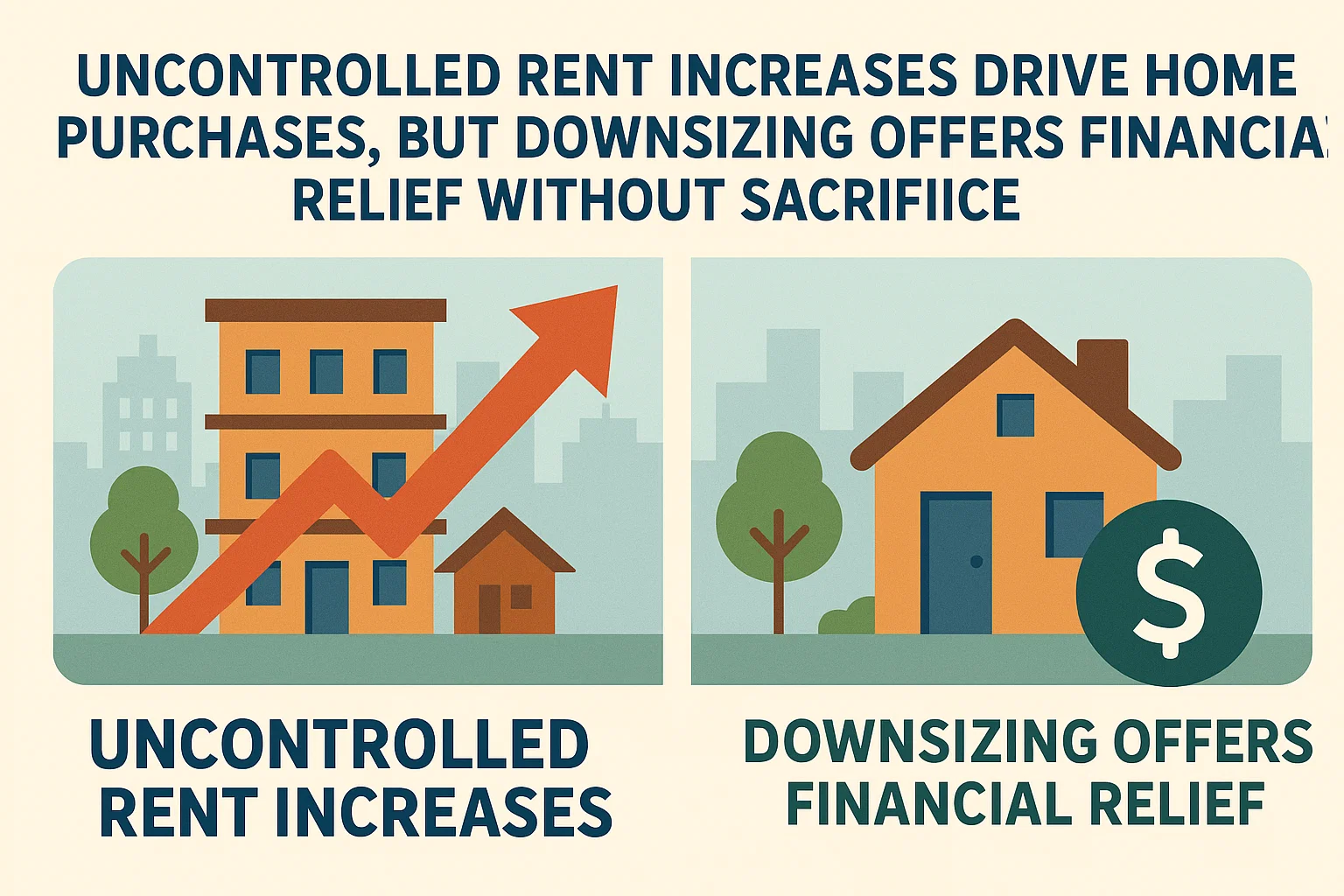
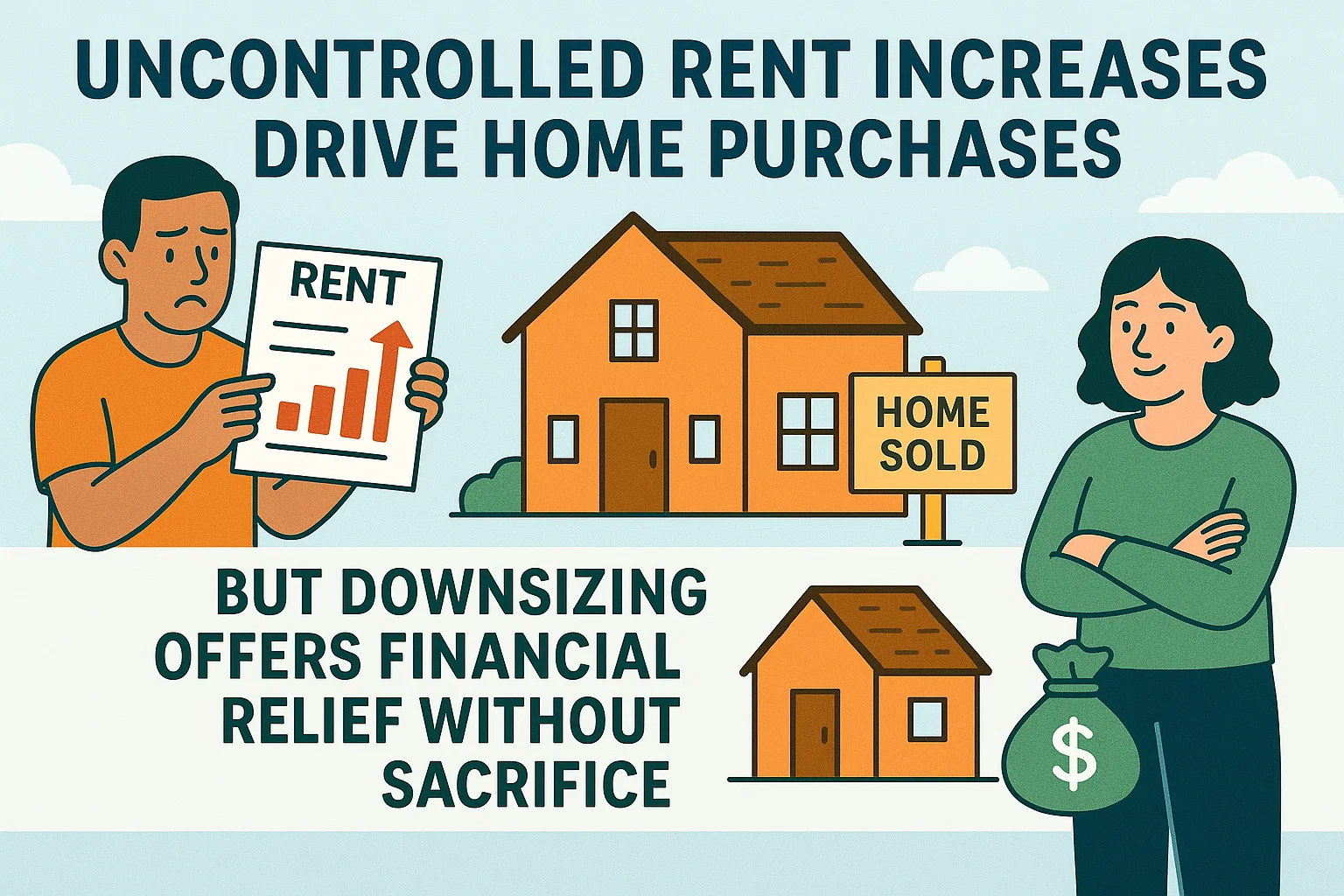
Uncontrolled rent increases have encouraged many to purchase a new home to better manage overall costs and find financial stability. However, blindly making the decision to purchase a new home can result in far more financial struggles if you don’t consider all the factors that come with homeownership.
Fortunately, the small house trend continues to grow in popularity. While the most press coverage comes when downsizing is taken to the extreme – a family of four moving from a 5,000 square foot luxury home into a 900 square foot cottage – the good news is families don’t have to go to such lengths to realize housing cost savings.
6 Costs Reduced by Downsizing
-
Lower Purchase Price
The math is simple: Homes with less square footage often equate to lower costs. Only paying for space you need results in a smaller monthly mortgage payment; these leftover savings can go toward other obligations like paying off debt, financing college, or saving for retirement.
-
Lower Property Taxes
Property taxes are based on the assessed value of a home, meaning a less expensive home will have lower property taxes than a larger, more expensive home. Assuming the properties are in the same city or town, this can result in significant annual savings.
-
Lower Homeowners Insurance Premiums
Similar to property taxes, a home that is less expensive to purchase will also be less expensive to insure than a pricier counterpart. If the home is located in a gated community, as many townhomes and 55+ subdivisions are, having on-site security can result in even greater savings in insurance premiums.
-
Lower Utility Bills
This one goes back to square footage; smaller homes, not just less expensive homes, cost less to heat, cool, and light. Buying new construction also means taking advantage of the latest in energy-efficient improvements and green features that are becoming the norm in home construction. Month after month, a smaller space to heat and cool combined with energy-efficient construction means lower utility bills.
-
Less Space = Less Stuff
The pursuit of a bigger, better lifestyle means we’re constantly trying to fill empty spaces in our homes with miscellaneous, and often useless, stuff. Many families who have downsized report that one of the biggest changes for them was adapting to more conscious spending and purchasing decisions. When you have less space and storage, you’ll be less inclined to frivolous purchasing.
-
Save on PMI
A smaller home with a lower purchase price can help you avoid paying for lender-required private mortgage insurance, or PMI. Personal Money Management Expert and popular national radio personality Dave Ramsey explains:
“PMI typically costs between 0.5% and 1% of the loan amount. So if your loan balance is around $140,000, you could be paying as much as $1,400 for PMI just this year.”How to avoid all this? PMI is required if you finance 80% of your mortgage. If you buy a smaller home where you can afford to put 20% or more down, you might be able to avoid paying PMI altogether.
A Word to the Wise
Downsizing, whether it’s into a townhouse or a smaller single family home, is a smart way to save money in many different ways. However, you’ll need to shop smart; don’t assume a smaller home is automatically less expensive. A large suburban or rural home could easily cost less than an urban townhouse, for example.
Even if the homes are similar in price, you should factor in property taxes if you are looking to buy in a different community from where you currently live. Property tax rates vary by town and county. Moving from a lower taxed community into one with a higher tax rate could negate any cost savings you expected.
All this means homebuyers need to look at the full picture to determine if buying a smaller home will truly save them money in the long-run.
Head over to Pre-ConstructionHomes.com to learn about listings in your area, and don’t forget to follow us on social media for more home buying advice.