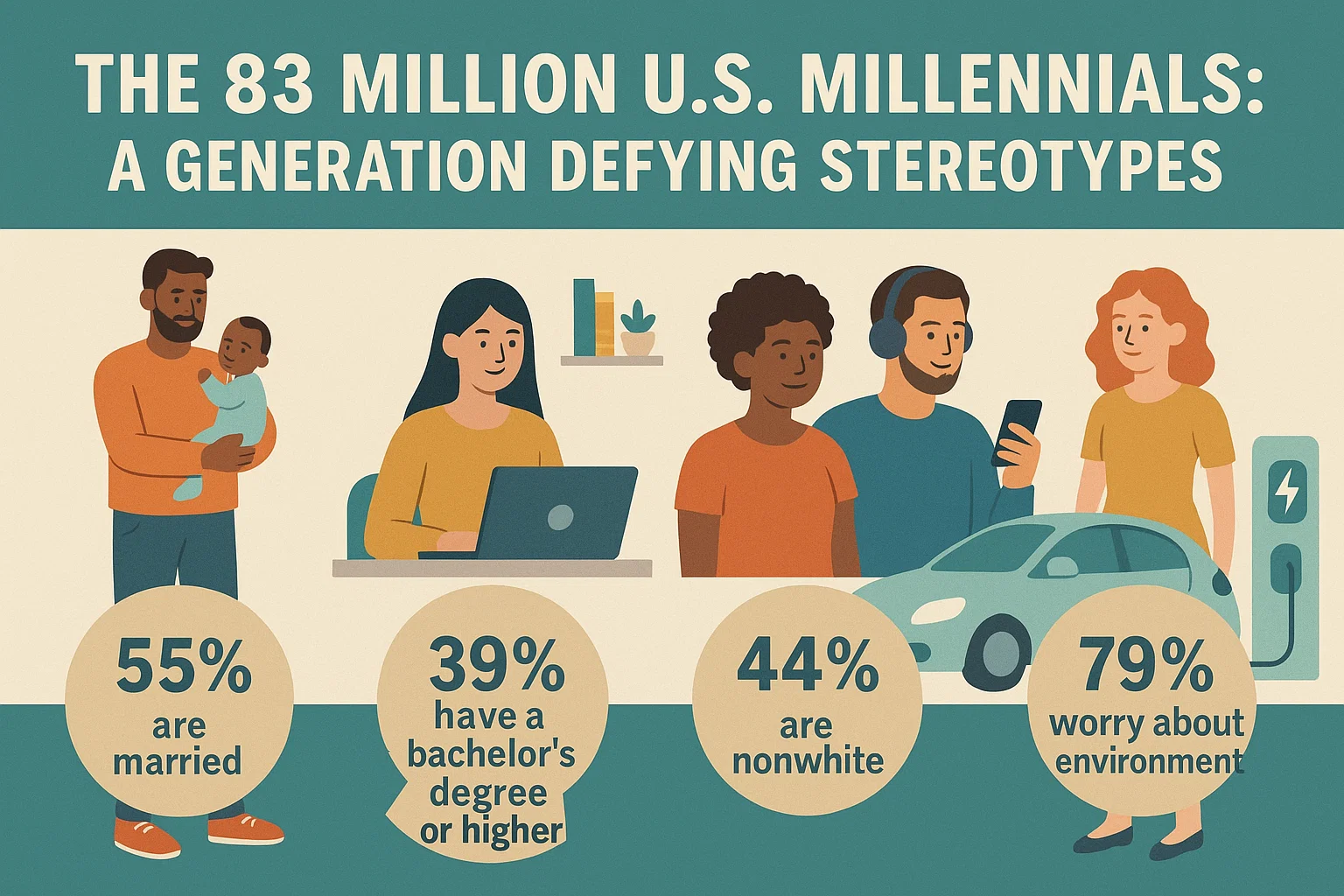
The 83 Million U.S. Millennials: A Generation Defying Stereotypes
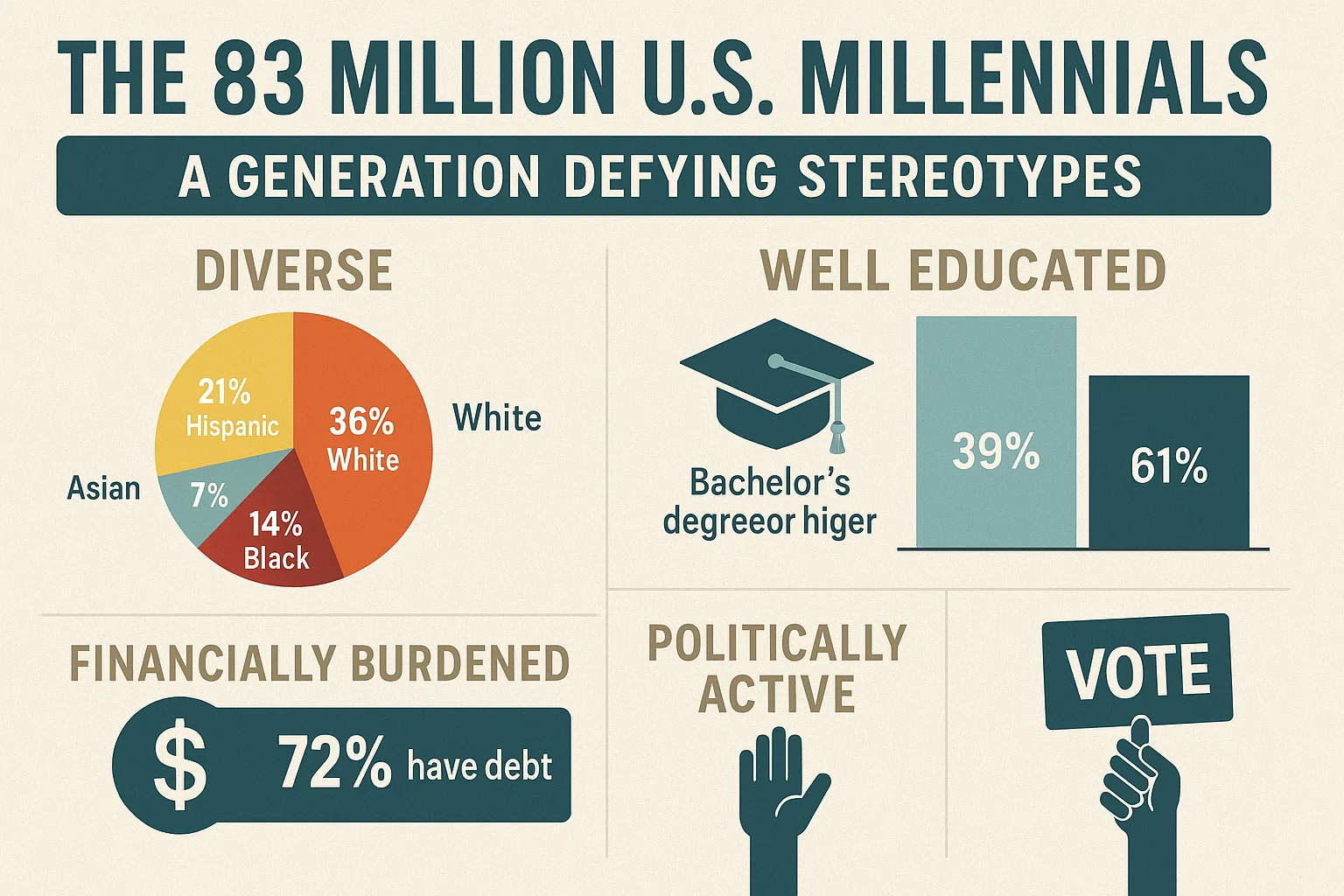
The 83 Million U.S. Millennials: A Generation Defying Stereotypes
Spanning ages 17 to 37, the 83 million U.S. Millennials represent a generation too vast and diverse to fit into simplistic labels. Researchers studying generational trends face a daunting challenge, given their wide age range and socioeconomic diversity. At the 2025 International Builders Show in Orlando, housing and design experts highlighted key insights into Millennial preferences and their impact on the housing market.
A Generation of Contrasts
“The spectrum of Millennials includes people with high incomes and low incomes and everything in between,” said one housing economist. “They are the most highly educated generation and also the most diverse, with 43% identifying as non-white.” Flexibility in floor plans and lifestyle emerged as a unifying trait, reflecting their dynamic needs.
Delayed Gratification for Homeownership
Contrary to assumptions that Millennials prefer renting, research shows only 6% say they never want to buy a home. The decline in homeownership is largely attributed to stagnant wages and rising home prices: wages grew 10% over the past decade, while home prices surged 40%. In the past year alone, lower-tier property prices rose 9%, compared to 4% for high-end homes.
Top reasons Millennials delay homeownership include:
- Affordability (21%)
- Lack of a down payment (16%)
Builders anticipate a surge in Millennial buyers as the largest segment (ages 27–29) enters prime buying years. Over 50% of Millennials plan to purchase a home within five years, often leveraging roommates or accessory dwelling units to offset costs.
Redefining Living Spaces
“Designing homes to accommodate shared living can make them more appealing,” said a design expert. Features like NextGen suites or detached units with private entrances help Millennials afford homes while maintaining flexibility. Single-family homes remain popular, but affordability challenges in markets like Los Angeles and Denver push buyers to prioritize location and compromise on square footage.
Among Millennial homeowners, 60% live in properties under 2,000 square feet. “The challenge is making smaller homes feel spacious,” the expert added.
Traditionalists vs. Trailblazers
Millennials fall into two broad categories:
- Traditionalists: Follow life milestones (college, marriage, kids) and prefer classic home features.
- Trailblazers: Seek modern designs, such as mid-century or transitional styles.
Design Priorities and Compromises
Location tops the list of homebuying factors, ahead of price, outdoor space, and neighborhood walkability. Millennials are twice as likely as older generations to prefer new construction, valuing design flexibility. About 50% would sacrifice a formal dining room for a multipurpose “everything room” that blends indoor and outdoor living.
“Millennials want customization, like designing a burrito at Chipotle or shoes on Nike’s platform,” said one expert. Tech-savvy but cost-conscious, they prioritize security systems but often DIY other tech installations.
Affordability Drives Decisions
While sustainability matters, Millennials hesitate to pay premium prices for energy-efficient features. Builders who include solar panels as standard—highlighting long-term savings—see stronger buyer interest. Open floor plans, flexible spaces, and cost-effective finishes (e.g., engineered wood flooring) remain critical to appealing to this generation.