If You Plan on Installing an Outdoor Kitchen Area
If You Plan on Installing an Outdoor Kitchen Area
Proper planning is essential to ensure ideal placement of your outdoor kitchen in relation to the main home, as well as sufficient access to utilities before construction begins. Below are key considerations for designing the perfect outdoor kitchen space:
Location and Size
Outdoor kitchens are typically built under a covered patio or as a standalone island. Consider these factors when choosing a location:
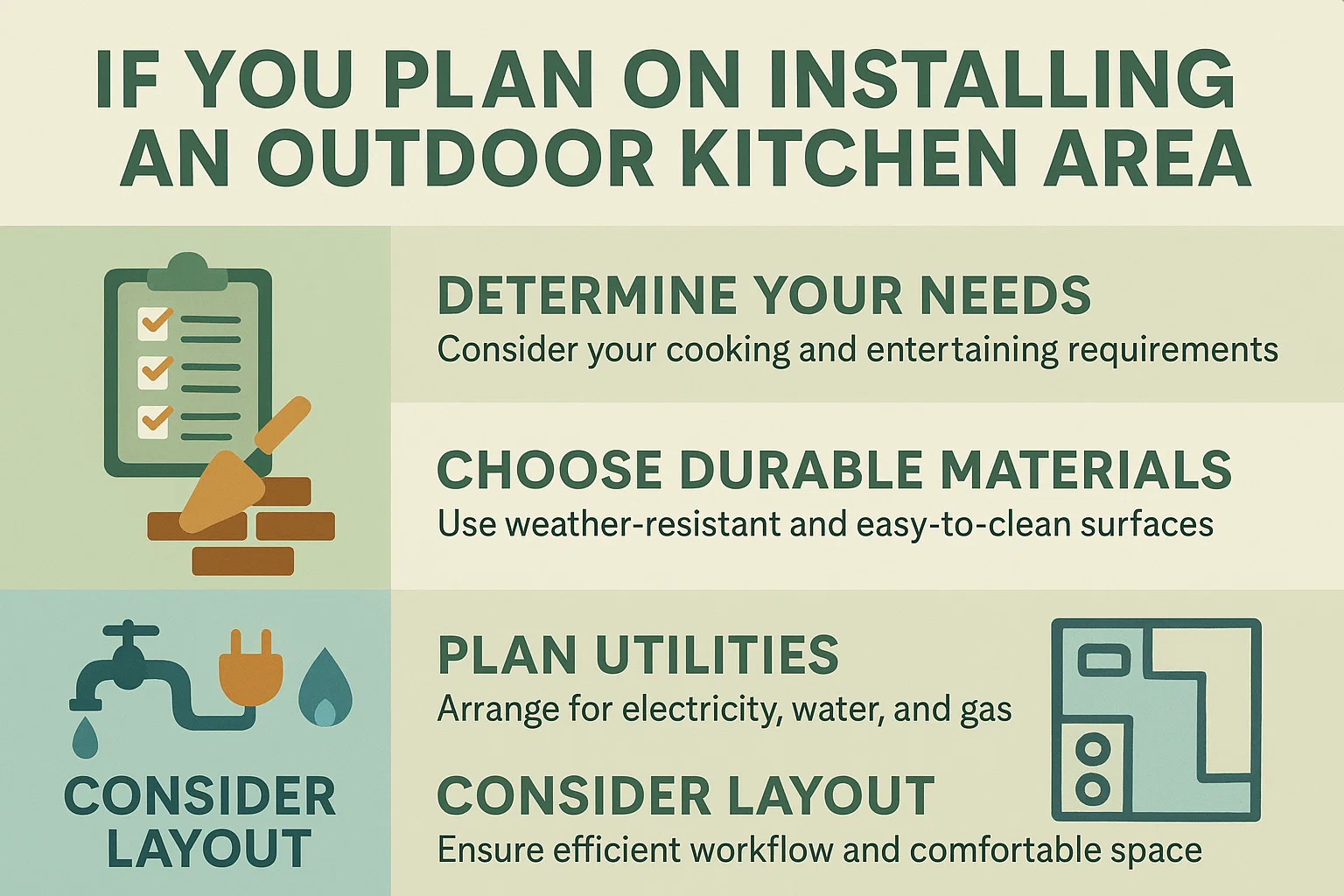
- Utility Access: Ensure water, gas, and electrical lines are accessible.
- Drainage: Grading or leveling may be required to prevent water pooling.
- Safety: Avoid high-traffic play areas and maintain distance from seating to reduce smoke exposure.
- Aesthetics: Preserve views from inside the home and choose weather-resistant materials.
Appliances
Select appliances that align with your cooking style and climate:
Cooking Grill
The grill is the centerpiece of most outdoor kitchens. Popular options include:
- Gas (natural or propane)
- Pellet, charcoal, electric, or infrared
Many designs include side burners for added versatility.
Sink and Drain
Install a sink for food prep and cleanup. Discuss plumbing requirements with your contractor early.
Refrigeration
Outdoor refrigerators and beverage coolers minimize trips indoors. Opt for weatherproof models.
Storage Solutions
Cabinets and drawers store utensils, spices, and tableware conveniently.
Specialty Appliances
Personalize your space with additions like kegerators, ice makers, or wine coolers.
Determine Final Size and Design
Work with your contractor to:
- Confirm appliance dimensions and utility placements.
- Construct the kitchen body, including cutouts for appliances.
- Install countertops after final inspections.
Optimal Arrangement of Grill and Appliances
Divide the kitchen into functional zones:
Zone 1 – Sink and Food Prep
Include counter space, a sink, and nearby refrigeration.
Zone 2 – Main Grill Area
Ensure adequate ventilation and distance from heat-sensitive appliances.
Zone 3 – Serving Area
Provide counter space and storage for utensils, condiments, and trash bins.
Zone 4 – Beverage Station
House coolers or specialty appliances away from heat sources.
Finishing Touches
- Lighting: Install exterior lights for safety and ambiance.
- Electrical Outlets: Add outlets for gadgets and entertainment systems.
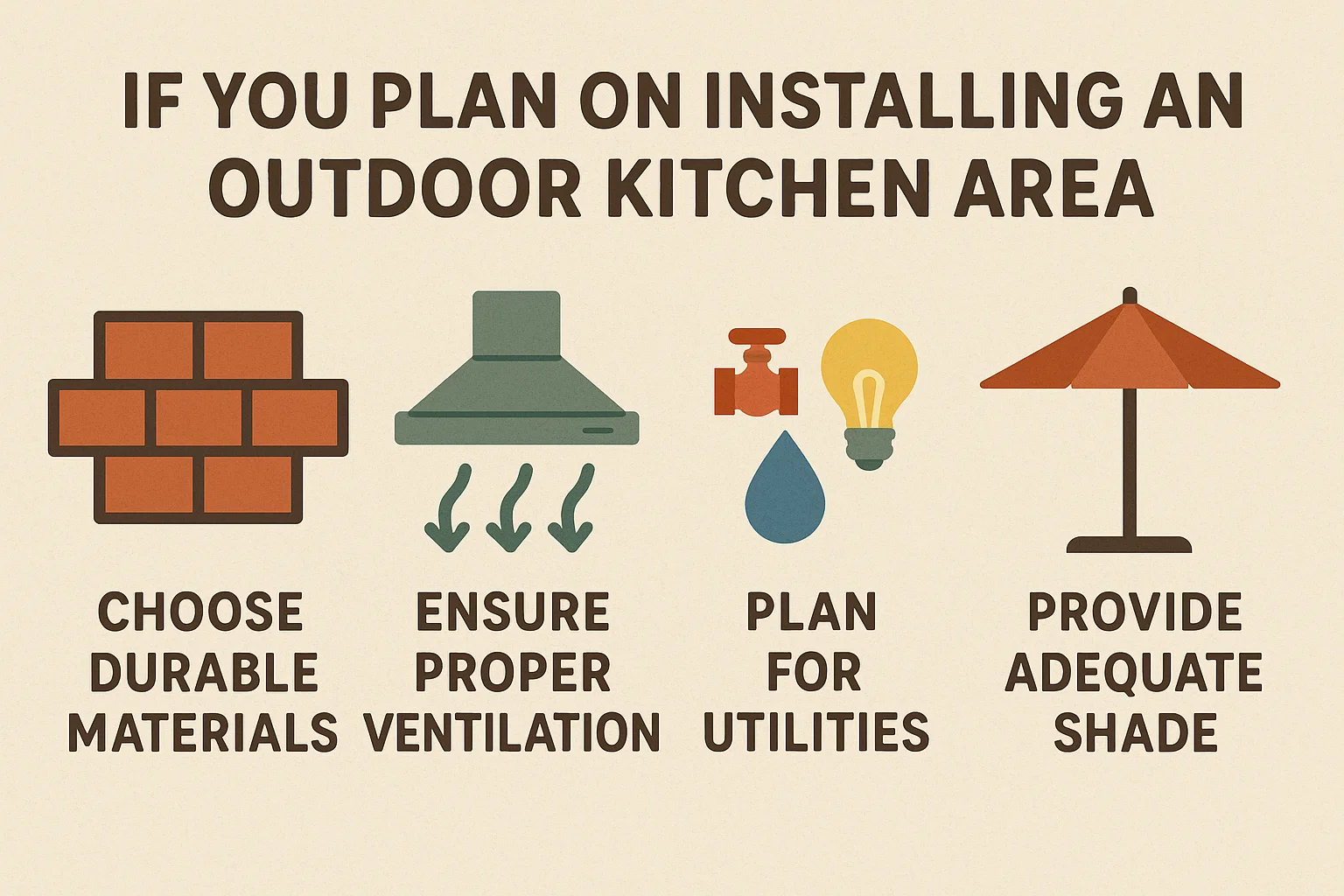
- Shade Structures: Consider pergolas or covers for sun protection.
Key Construction Tips
- Include access panels for utility lines.
- Verify all utilities are installed before attaching countertops.
- Use vent hoods for grills in covered patios.
- Choose outdoor-rated appliances to ensure durability and warranty compliance.