Home Security is Vitally Important to Families
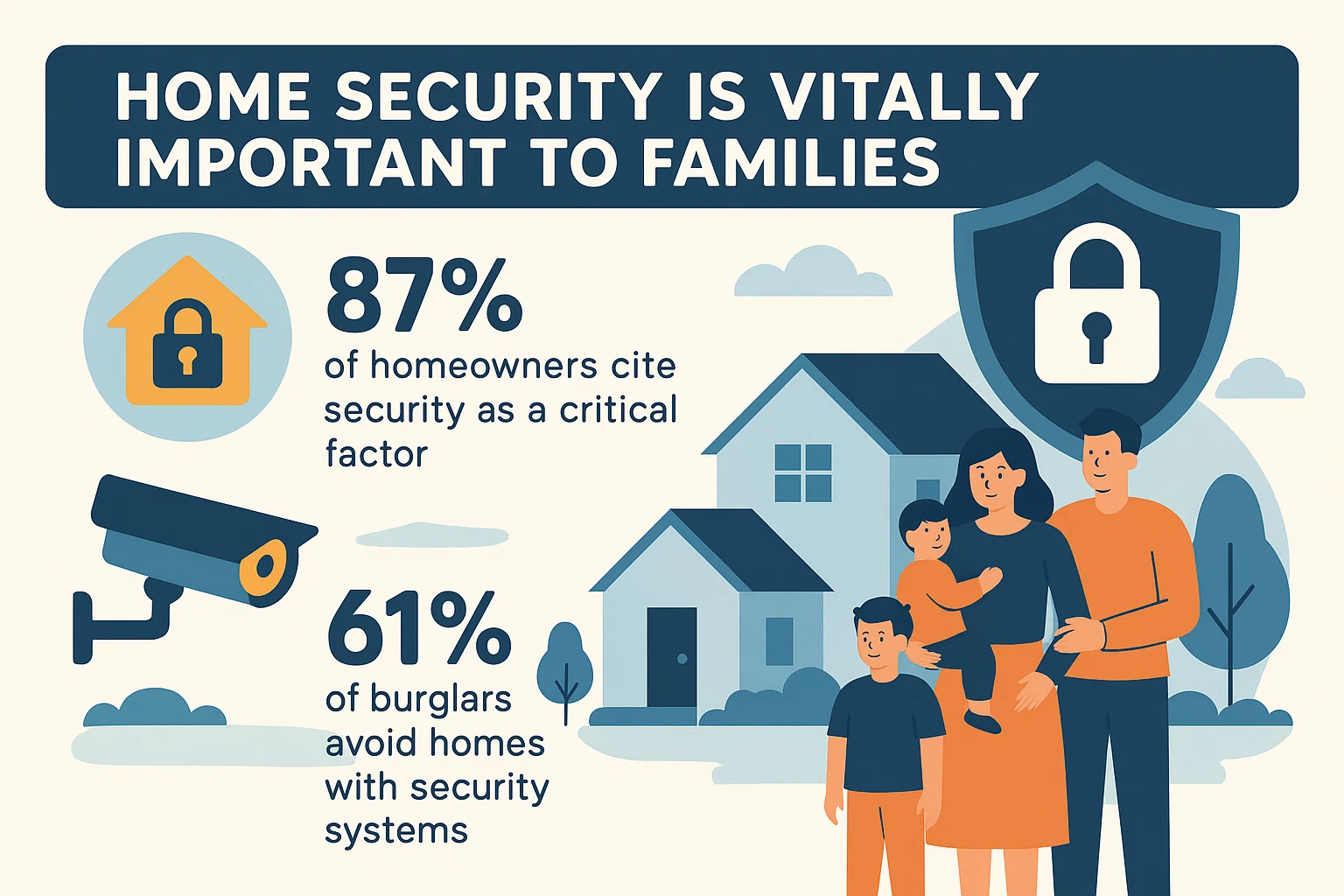
Home Security is Vitally Important to Families
One of the first things most families research when considering buying or building a new home is the safety of the area. What are the crime rates like? Where are the fire and police departments located? What kind of reputation does the community have as far as being safe for families and kids? The security questions shouldn’t stop at the community level. Homeowners need to consider the safety and security of their house, too. Just because a community is considered safe doesn’t mean criminals won’t target it.
Experts suggest that burglars look for an easy target: “Although home burglaries may seem random in occurrence, they actually involve a selection process. The burglar’s selection process is simple … choose an unoccupied home with the easiest access, the greatest amount of cover, and with the best escape routes.” Homeowners can use any of the following eight actions to improve their home’s security and protect their family’s safety.
1. Secure Windows and Doors
One of the simplest ways to improve your home’s security is to lock your windows and doors! According to a survey conducted by Nationwide Insurance, most burglars enter a home through the front door and nearly 25 percent of survey respondents admitted to leaving doors and windows unlocked when they were not at home. As far as an easy target goes, it doesn’t get much easier than that!
2. Meet the Neighbors
Getting to know your neighbors is a great way to build an all-around safer neighborhood. Neighbors who are at least friendly with one another, if not friends, tend to look out for each other. Your neighbors will notice if someone suspicious has been around your home and can help keep an eye on the home when you’re away by shoveling snow, mowing the lawn, keeping the plants watered, and generally helping the property look lived-in and not empty. Neighbors also make a better choice for stashing extra keys than hiding the keys in a flowerpot.
3. Identify Resources and Create a Plan
It’s important for families with children, especially if the kids will be coming home to an empty house after school, to have identified safe resources shortly after they move in. Kids should have access to:
- A phone;
- A list of emergency phone numbers;
- A trusted friend, family member, or neighbor;
They should know what to do if they encounter an emergency situation in the home. Establish rules for opening the door for strangers, having friends over, locking windows and doors, and using the alarm system, if you have one. Create an emergency exit plan for fires or break-ins.
4. Maintain Privacy
Simple actions like using blinds or curtains on the windows can turn burglars off because they can’t see what’s inside. Preventing people from seeing inside the home hides valuables from prying eyes and makes it more difficult to tell whether someone is home.
5. Use Timers and Lights
Burglars will always go for the house that looks vacant. Use timers and lights to give the appearance that someone is home, especially when you’re out of town. Timers can turn lights, TVs, or radios on and off. Exterior lighting in the front and back of the home eliminates dark hiding spots. Motion sensors provide an element of surprise if someone is on your property.
6. Be Wary of Strangers
Only allow service providers you’ve contacted and scheduled into your home. Avoid offering tours of your home to strangers, and schedule service appointments before moving in to prevent strangers from seeing your valuables.
7. Get the Kids a Dog
Dogs are an effective burglar deterrent. Their presence alerts you to unusual activity, and even small dogs can deter burglars with their barking.
8. Consider a Home Security System
Home security systems may not prevent entry, but alarms can scare burglars off before they take anything. These systems alert you to breaches and trigger a rapid response from authorities.