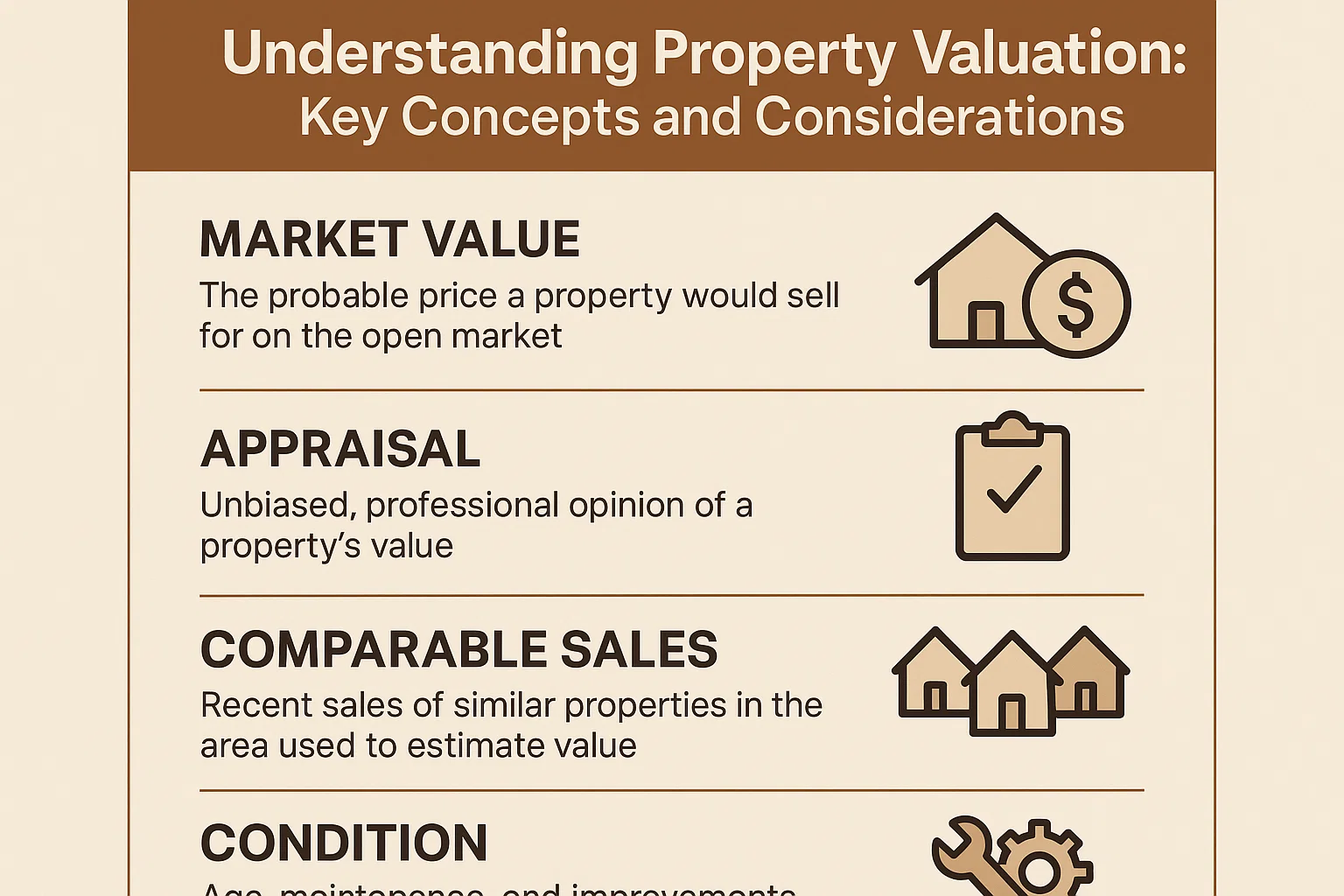
Understanding Property Valuation: Key Concepts and Considerations
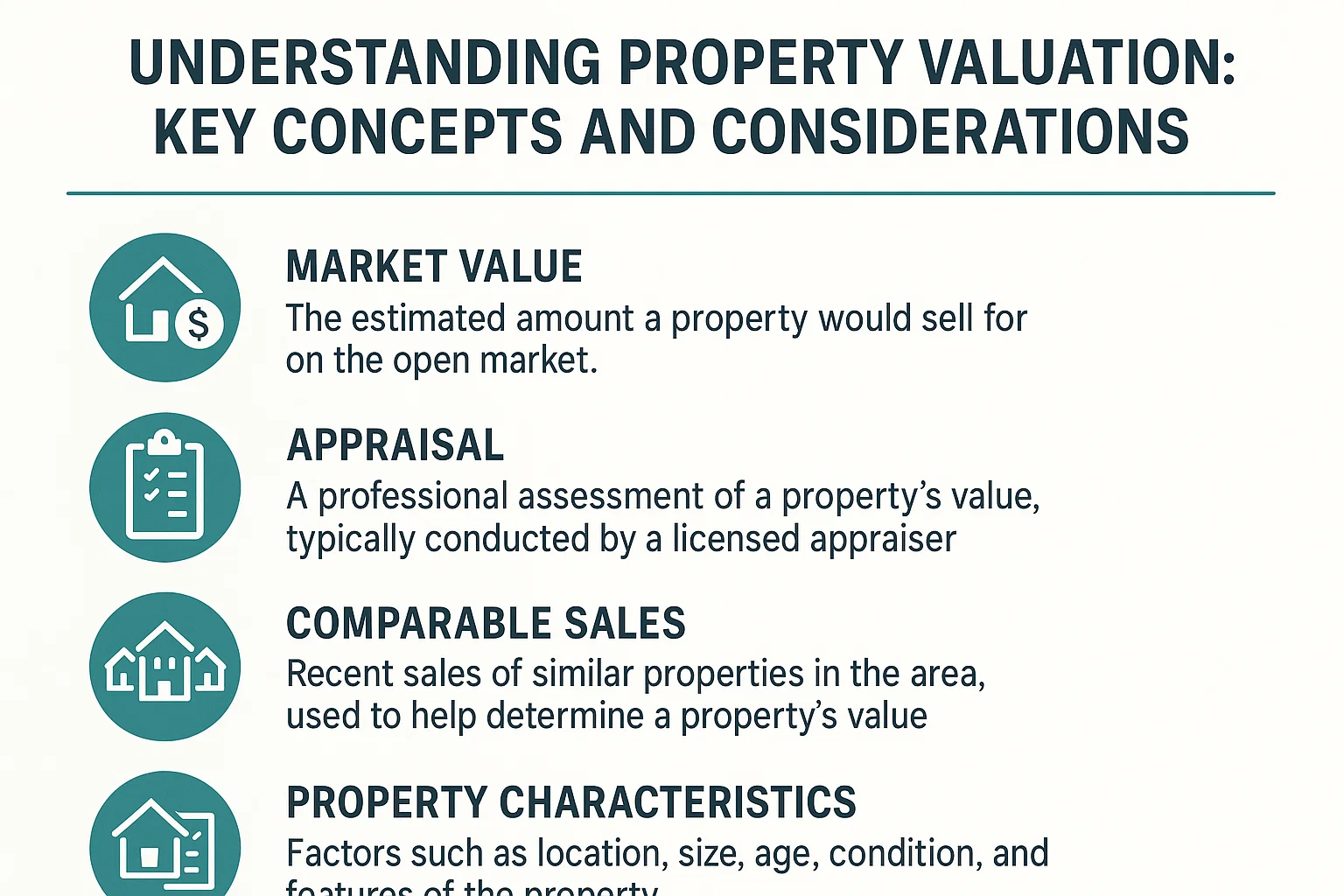
Understanding Property Valuation: Key Concepts and Considerations
Property valuation serves as an objective assessment of a property’s worth, though it is not an exact science. As a result, different appraisals of the same property may yield varying results. For transactions involving buying or selling, valuations typically focus on market value—the probable selling price under current market conditions. However, other valuation types are also critical in specific contexts:
- Insurance Value: Reflects the cost to replace or repair a property in case of damage.
- Replacement Value: Estimates the expense to rebuild a property with similar materials and standards.
- Assessed Value: Determined by tax authorities to calculate property tax obligations.
Why Appraised Value Is Fluid
Appraised value is not static. Shifts in market trends, economic factors, or local demand can significantly influence this figure. Additionally, appraisals do not account for unique circumstances, such as urgent sales, which might necessitate pricing adjustments outside standard evaluations.
How Lenders Use Appraisals
When approving mortgages, lenders typically base their decisions on the lower of either the appraised value or the sale price. This practice helps mitigate financial risk by ensuring the loan amount aligns with the property’s current market worth.