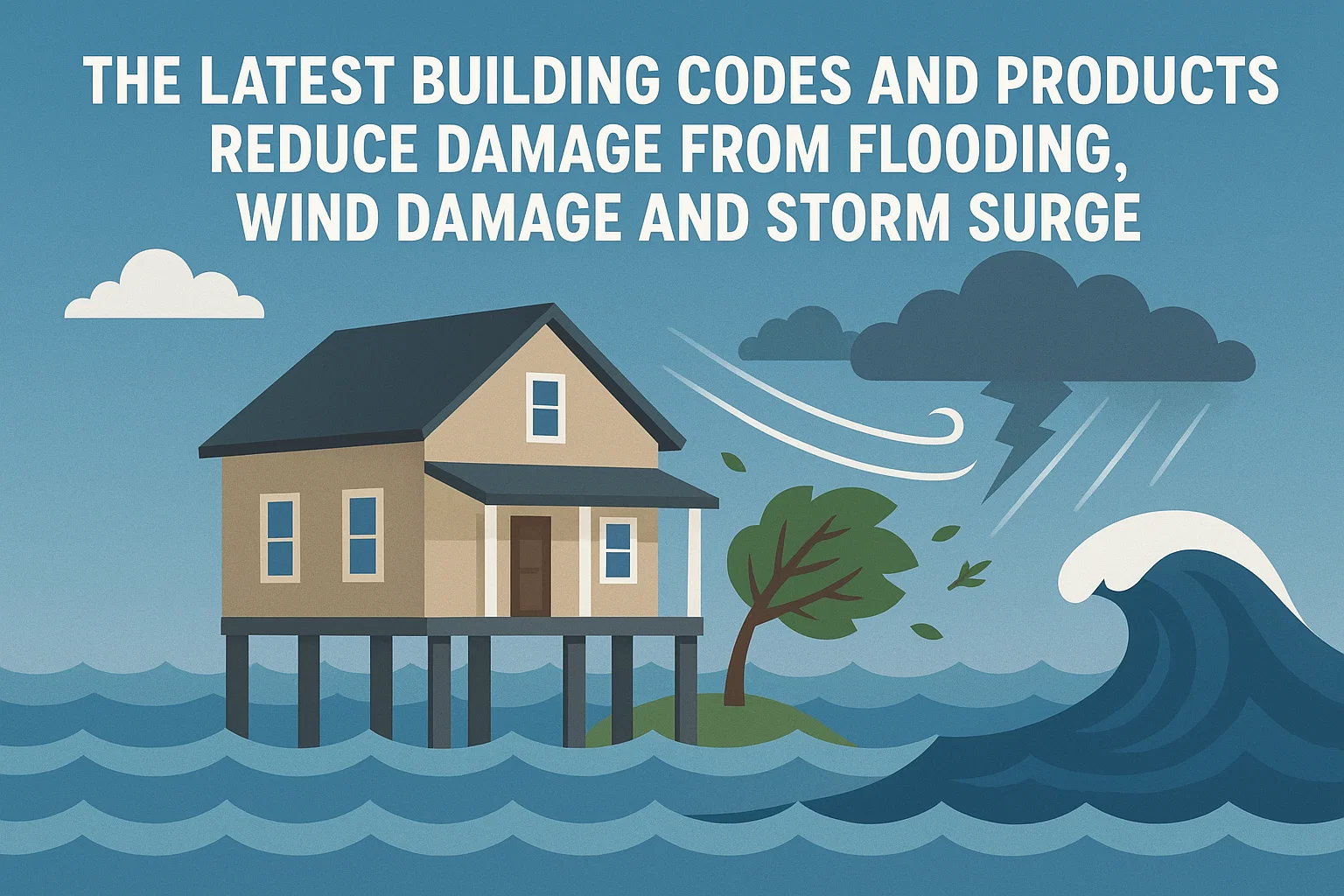
The Latest Building Codes and Products Reduce Damage from Flooding, Wind Damage and Storm Surge
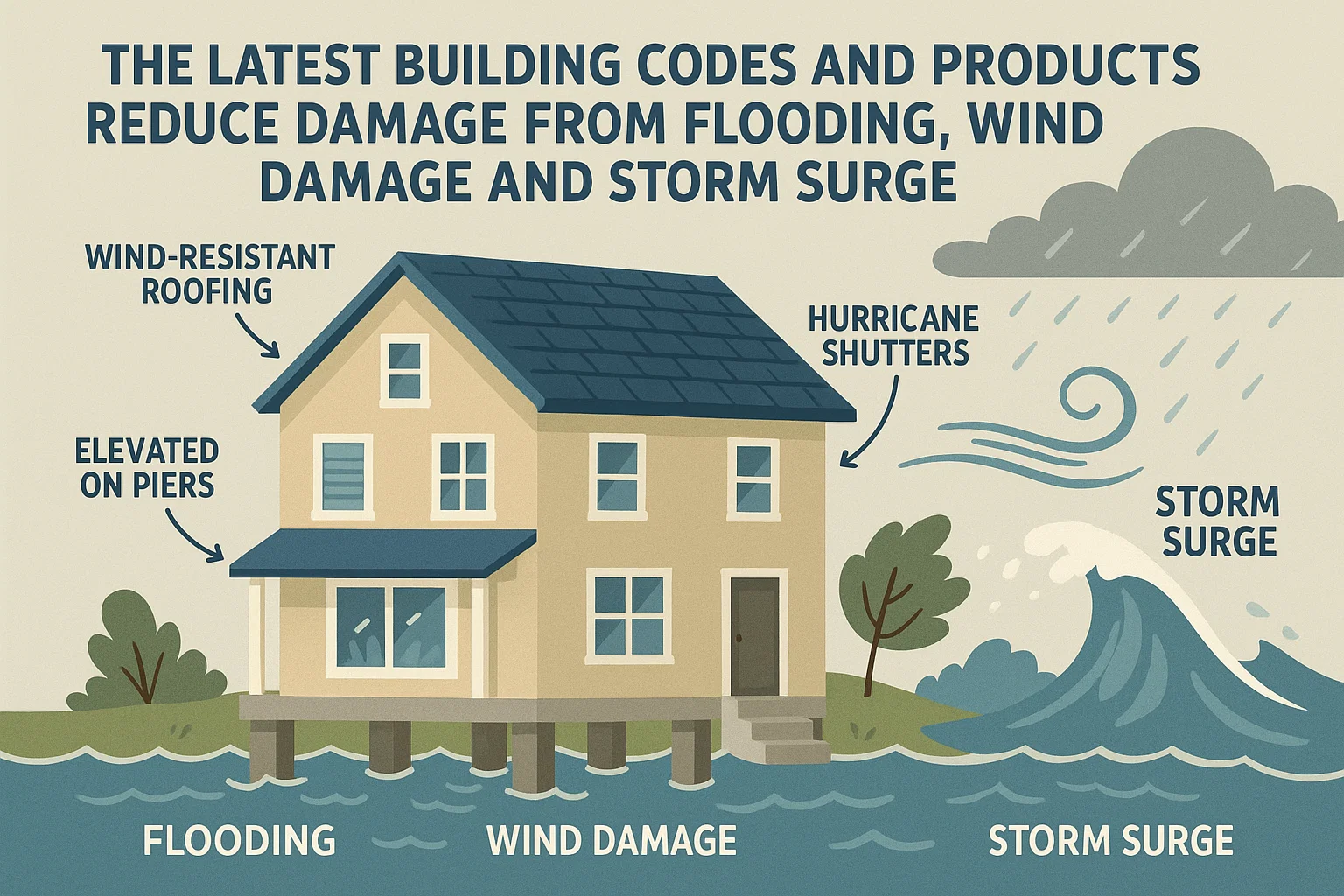
The Latest Building Codes and Products Reduce Damage from Flooding, Wind Damage and Storm Surge
The recovery in Houston and Florida from Hurricanes Harvey and Irma has just begun. The long-term impact of these massive storms on home building in hurricane-prone areas and the refinement of building codes has yet to be determined. However, the short-term view is clearer: New home buyers in the future will be more aware of the risks of damage from storms and floods — and builders, building code officials, and product manufacturers will continue to work together to create solutions that result in safer homes.
“There is going to be a huge remediation business at first. Capacity will be stretched. This could cause delays if certain materials must go on allocation. Overall, it will put pressure on and constrain building material supply for a while, which could up the price of building materials, which could cause an uptick in the price of housing.”
— Ed Hudson, director of Marketing Research at the Home Innovation Research Labs
Eventually, it should also impact building codes. Building codes became dramatically more stringent following past major hurricanes like Andrew and Katrina. The 2000 International Residential Building Code (IRC), for example, established a requirement for impact-resistant doors and windows in hurricane-prone areas. All new homes in regions with wind speeds exceeding 110 mph must now meet storm-resistant standards. In Florida, roof straps connecting a home’s roof to the foundation became mandatory in areas expecting 120 mph winds. Subsequent code updates have addressed load paths in coastal buildings, requiring homes in high-velocity wave zones to be supported on piles, columns, or shear walls.
FEMA’s Expanded Flood Zones
Over 20,000 U.S. communities have been mapped by FEMA (Federal Emergency Management Agency) according to flood risk. Recently, FEMA expanded flood zone areas by raising target elevations, prompting builders to construct at greater heights and adhere to National Flood Insurance Program (NFIP) regulations in more locations.
“Codes will be modified and there will likely be a much higher consciousness now for building flood-resistant structures.”
— Ed Hudson, director of Marketing Research at the Home Innovation Research Labs
Best Practices for Building in Hurricane-Prone Zones
Hurricane-resistant construction focuses on three key areas: wind uplift, debris penetration, and water