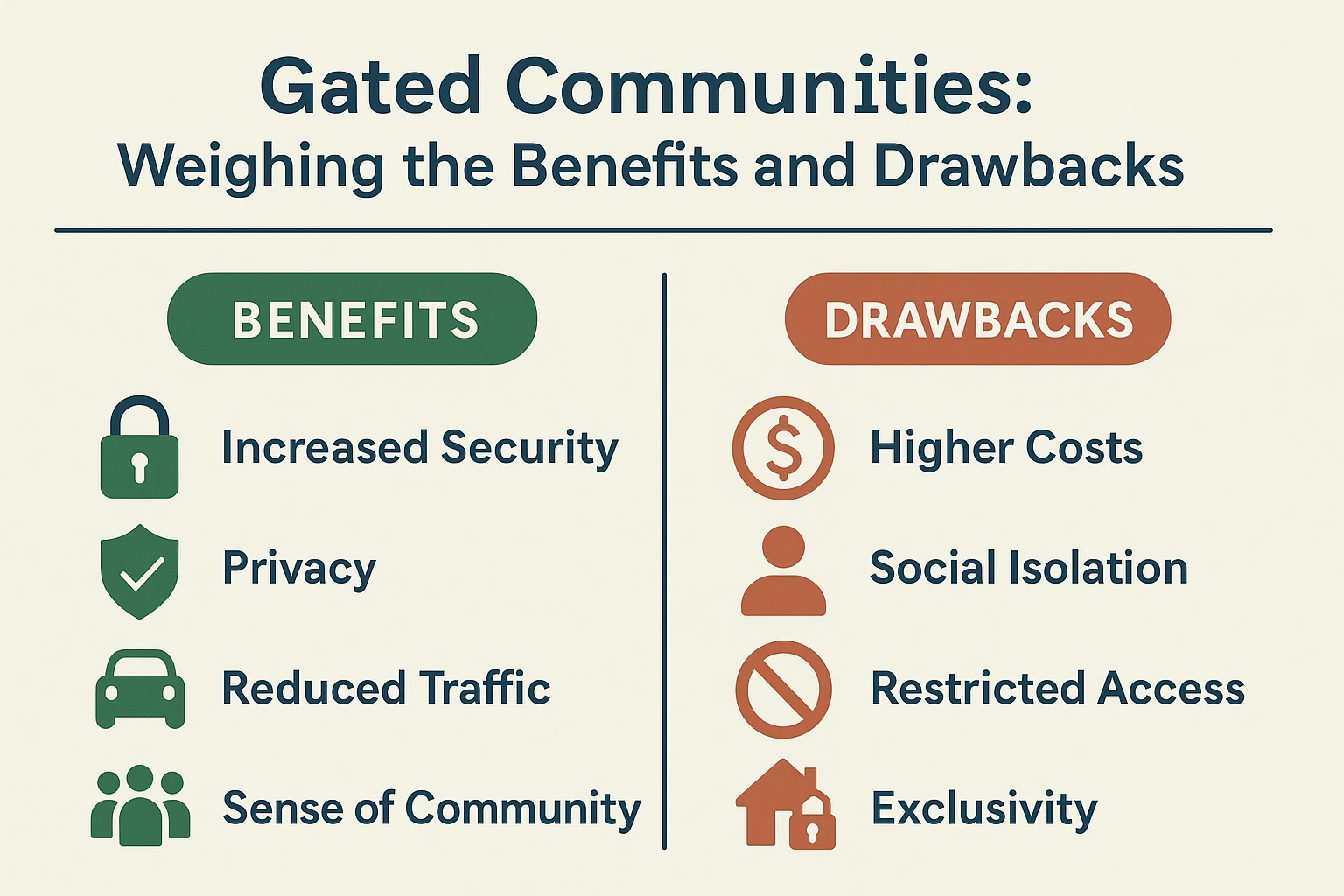
Gated Communities: Weighing the Benefits and Drawbacks
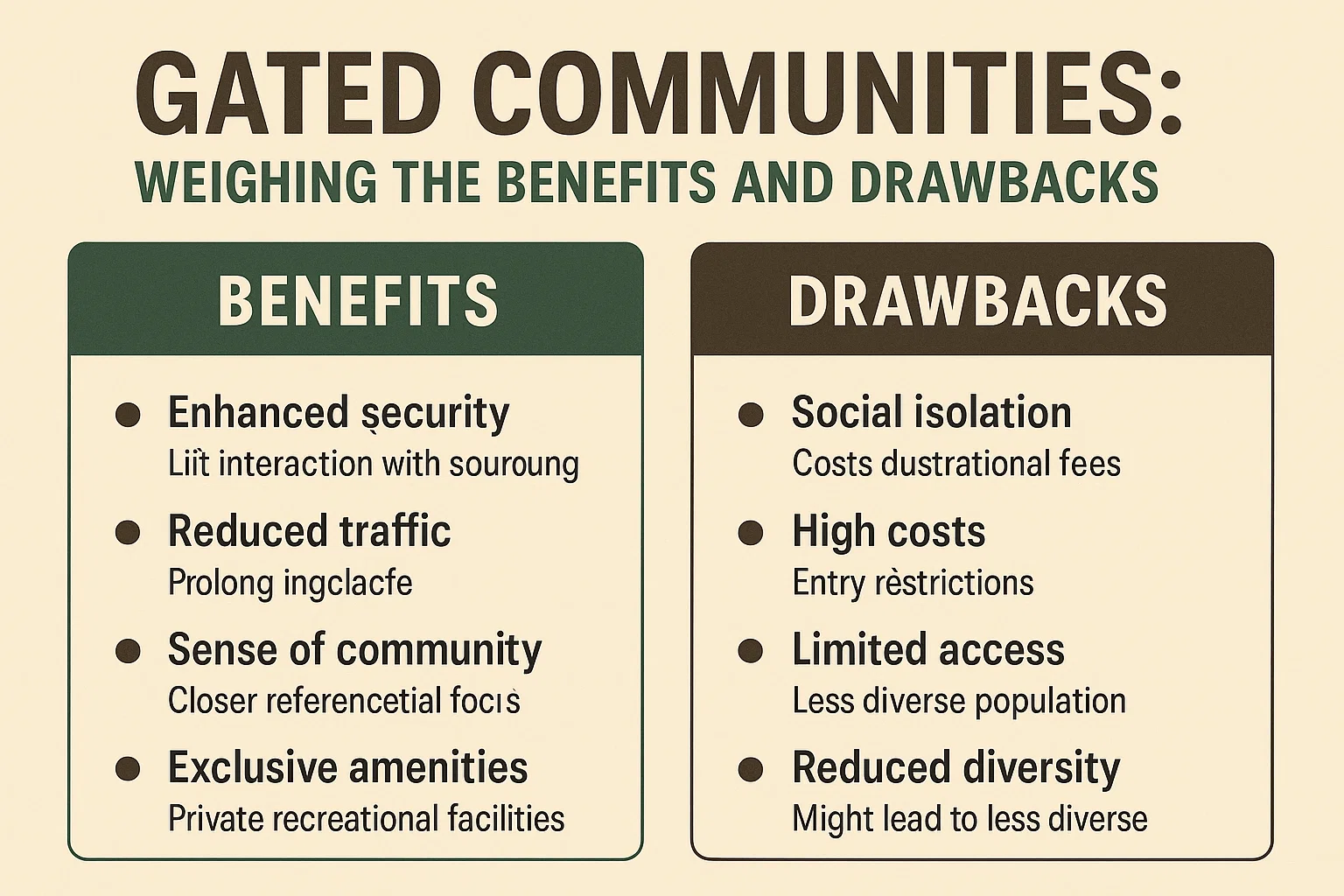
Gated Communities: Weighing the Benefits and Drawbacks
What Defines a Gated Community?
A gated community is a residential area that restricts public access through physical barriers such as gates, walls, or fences. Entry is typically controlled via security personnel, key cards, or remote devices, ensuring only residents and approved guests can enter. These communities vary in size and location, ranging from urban high-rises to rural estates, and may include single-family homes, condos, or apartments.
Key Considerations for Prospective Residents
Security and Safety
Gated communities often emphasize enhanced security through controlled entry points, surveillance systems, or patrols. However, research on crime reduction remains mixed:
- A 2013 study noted 33% fewer burglaries in gated areas.
- Other research found minimal impact on burglary rates.
While gates may deter casual trespassing, emergency response times could be delayed due to access barriers. Reduced traffic within the community, however, often creates safer environments for children and pedestrians.
Privacy and Social Dynamics
Residents often enjoy quieter surroundings with limited solicitation and tighter-knit social connections through organized events. Conversely, some may feel isolated from broader cultural interactions or restricted by guest access protocols.
Governance and Restrictions
Homeowners’ associations (HOAs) enforce rules covering:
- Exterior home modifications
- Parking limitations (e.g., RV prohibitions)
- Pet policies and noise ordinances
- Short-term rental restrictions
Non-compliance may result in fines or legal action, making HOA transparency critical for potential buyers.
Financial Implications
Gated communities often carry higher costs:
- Homes may cost $30,000+ more than non-gated equivalents.
- HOA fees frequently exceed those of standard neighborhoods due to security and amenity upkeep.
For example, annual fees in some Florida communities range from $600 (non-gated) to over $2,000 (gated).
Shared Amenities
Common features include pools, fitness centers, parks, and private beaches. While these amenities may boost property values, some studies suggest maintenance costs could offset financial benefits over time.
Is a Gated Community Right for You?
Choosing a gated community involves balancing security preferences, lifestyle needs, and budget constraints. Prospective buyers should thoroughly review HOA guidelines, community culture, and long-term costs before committing. Ultimately, this decision shapes not just your living space, but your daily quality of life.